Polymarket Academy

How a U.S. Soldier Made $404,000 on Polymarket Then Got Arrested

A U.S. Special Forces soldier who helped plan the mission that captured Venezuelan leader Nicolás Maduro has been charged with using that classified knowledge to win over $404,000 on Polymarket days before it became public. Here's what the case shows about how traceable prediction-market trading really is.

View Timeline

What Happened

Share

A soldier allegedly used classified military knowledge to place a 1,242%-return bet on Polymarket, then got caught. The Department of Justice says on-chain trading and exchange records were enough to trace an anonymous-looking wallet back to a named defendant.

$404,222

Profit on one bet

A ~1,242% return on a single $32,537 wager

$33,933

Total wagered

Across four Maduro-related Polymarket markets

4

Federal charges filed

Including commodities fraud and wire fraud

Introduction

Prediction markets like Polymarket run on crypto wallets rather than named brokerage accounts, and that's led some traders to assume they trade with a degree of anonymity that traditional markets don't offer. A federal case unsealed in April 2026 is the clearest test yet of that assumption, and it didn't hold up.

A U.S. Army Special Forces master sergeant, Gannon Ken Van Dyke, was charged with using classified information about an active U.S. military operation to place highly profitable bets on Polymarket days before that operation became public. He was arrested within months. This guide walks through what prosecutors allege happened, the case against him, and — for anyone copy trading on Polymarket — what it demonstrates about how traceable on-chain activity really is.

Timeline

  1. December 2025

    Creates a Polymarket account

    Van Dyke's account is new — it has no prior trading history.

  2. Early January 2026

    Places four bets totaling $33,933

    All four wager on Maduro-related outcomes, days before the operation is announced.

  3. January 5, 2026

    Trump announces Maduro's capture

    Operation Absolute Resolve becomes public. The bets settle.

  4. January 2026

    Wins more than $409,000

    The largest single bet, $32,537, alone returns approximately $404,222.

  5. Following weeks

    Unusual trading activity draws scrutiny

    According to reporting, coverage of the trades prompts an investigation.

  6. April 2026

    Charged and arrested

    The DOJ unseals an indictment on four federal counts.

The Bets

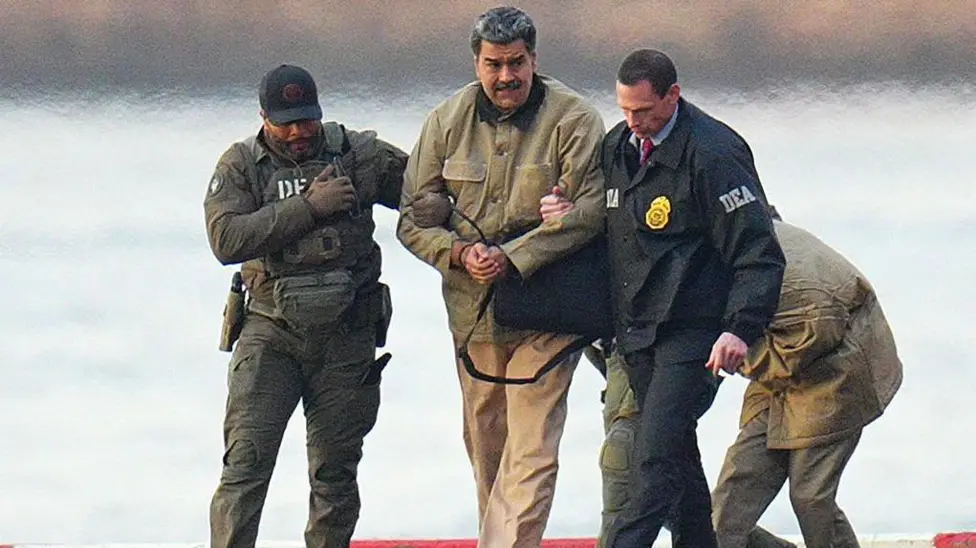
Nicolás Maduro being escorted by DEA agents following his capture
Nicolás Maduro is escorted by DEA agents following his capture as part of Operation Absolute Resolve.

According to the DOJ indictment, Van Dyke was involved in the planning and execution of Operation Absolute Resolve, the U.S. military operation that captured Venezuelan leader Nicolás Maduro and his wife, Cilia Flores, in early January 2026. President Trump publicly announced the capture on January 5, 2026.

Van Dyke had created a Polymarket account the previous month, in December 2025. In the days before the operation became public, prosecutors say he placed bets totaling $33,933 across four Maduro-related markets — wagering on outcomes like whether Maduro would be removed from office by the end of January. His largest single wager, $32,537, alone returned approximately $404,222 roughly 1,242% profit. Across all four bets, he won more than $409,000.

MarketAmount WageredReturnOutcome
Maduro removed from office by Jan 31$32,537~$404,222 (~1,242%)Won
3 other Maduro-related markets (combined)~$1,396Not individually disclosedWon

Total: $33,933 wagered across four markets, returning more than $409,000.

The Justice Department's indictment put the allegation directly: "Rather than safeguard that information as he was obligated to do, VAN DYKE decided to use that classified information to place trades on a prediction market platform for his personal profit."

The Charges

Van Dyke was indicted on multiple federal counts: unlawful use of confidential information for personal gain, theft of nonpublic government information, commodities fraud, and wire fraud. He has been charged, not convicted, and like any defendant is entitled to a presumption of innocence unless and until proven guilty in court.

Why this matters

The commodities fraud and wire fraud counts show regulators are prosecuting this like insider trading in a traditional market — a federal crime with real prison exposure, not just a platform account ban.

How He Was Caught

Polymarket accounts run on crypto wallets, and wallets don't come with a name attached by default. But "pseudonymous" and "anonymous" aren't the same thing, and this case shows the gap between them.

Wallets aren't truly anonymous

Every trade is recorded permanently on-chain, tied to a wallet address that can eventually be linked back to a real identity.

Unusual patterns get flagged

A brand-new account wagering big on a narrow outcome, then winning over 1,200% right before major news breaks, draws scrutiny fast.

The money has to enter somewhere

Funding a wallet almost always touches a centralized exchange, and exchanges can be compelled to hand over identity records.

Reporting on the case adds one more detail worth noting: once media coverage of unusual trading tied to the operation surfaced, Van Dyke allegedly tried to delete his Polymarket account and change the email address registered to the crypto exchange account he'd used to fund it. Neither step undoes a permanent, public blockchain record; if anything, it's the kind of after-the-fact action that tends to look worse to investigators, not better.

Platform Responses

Both platforms tied to the case went on record once the arrest became public.

Polymarket

Polymarket

"Insider trading has no place on Polymarket. Today's arrest is proof the system works."

As reported by ABC News.

Kalshi

Rival prediction market Kalshi has said it separately identified and blocked Van Dyke on its own platform, according to reporting on the case.

Whatever the full details turn out to be, the case has become a reference point for the industry: platform-level monitoring and on-chain traceability, not user anonymity, are what these markets are actually relying on to catch this kind of activity.

What It Means for Traders

Two takeaways apply well beyond this one case.

Trading on material nonpublic information is a real federal crime on Polymarket, not a clever loophole. The charges here — commodities fraud, wire fraud, theft of nonpublic government information — are the same categories of crime regulators use against insider trading in traditional markets. "It's just a prediction market" is not a legal defense.

A wallet that suddenly posts an outsized, perfectly-timed win is a signal worth questioning, not just admiring. If you're evaluating a wallet to copy — the exact question our guide to finding a wallet worth copying walks through — a brand-new account with a 1,242% return on a single, news-driven bet is precisely the kind of pattern worth scrutinizing rather than blindly following. Sometimes it's a lucky read on the news. This case is a reminder it can also be something else entirely, and either way it's not a track record you can rely on repeating.

Final Thoughts

This case cuts against a common assumption about crypto-based prediction markets — that trading through a wallet instead of a named brokerage account offers real anonymity. It doesn't. Polymarket's own framing of the arrest — "proof the system works" — is a fair description of the traceability every trader on the platform should assume applies to them, good behavior or bad.

Takeaway

Crypto wallets are pseudonymous, not anonymous. On-chain activity, exchange records, and blockchain analysis can often connect trading activity back to real identities.

If this case has you thinking more about who you're trusting with a copy trade, our Are Polymarket Copy Trading Bots Safe? guide covers the custody side of that risk, and our breakdown of a real $175K copy trading exploit covers what can go wrong with the wallet you follow, even when the bot itself is secure.

About This Guide

Written by Polymarket Academy Editorial Team

The Polymarket Academy Editorial Team independently researches and reports on the copy trading ecosystem. Case details here are drawn from ABC News reporting and the DOJ indictment, with additional context from other published reporting. Van Dyke has been charged, not convicted.

Last reviewed: July 2026

Sources

This article reports on multiple independent sources.

Frequently Asked Questions

Gannon Ken Van Dyke, a U.S. Army Special Forces master sergeant who, according to the DOJ, was involved in the planning and execution of Operation Absolute Resolve, the U.S. military operation that captured Venezuelan leader Nicolás Maduro and his wife, Cilia Flores, in early January 2026.