Polymarket Academy

How to Find the Best Polymarket Wallets to Copy Trade

Not every wallet at the top of Polymarket's leaderboard is worth copying. This guide explains the metrics that actually matter and shows you how to properly research a wallet before risking your money.

  • Beginner Friendly
  • 8 min read
  • Updated July 2026
  • Learn the metrics experienced copy traders actually use
  • Avoid the wallets most beginners mistakenly follow
  • Research wallets before risking real capital
  • Works with any Polymarket copy trading bot

Short on time? Here's the 30-second version.

Don't choose a wallet just because it's at the top of Polymarket's leaderboard. Look for at least 150 completed trades, several months of consistent history, a healthy win rate, and a trader who specialises in just a few market categories. Before risking any money, track the wallet for a week or two to see if their results hold up in real time.

The biggest mistake beginners make

Most people find a wallet the same way: open the leaderboard, sort by profit, and copy whoever is at the top.

The problem is that the leaderboard isn't designed to find the best traders. It's designed to show whoever has made the biggest lifetime profit, regardless of how that profit was earned.

One lucky trade, months of automated trading, or a strategy that's impossible to copy can all push a wallet to the top.

That's why experienced copy traders ignore the ranking and judge wallets using completely different metrics.

Bad wallet vs. good wallet

Before the specific mistakes, here's what the difference actually looks like side by side.

Worth following

  • 200+ trades with a real track record
  • Consistent for 3+ months, not just one week
  • Wins spread across many trades, not one
  • Focused on 2-3 market categories

Red flags

  • Sits at #1 by lifetime profit alone
  • Fewer than 100 trades total
  • One outsized win driving the whole record
  • Trades every category at once

Common mistakes people make

Most beginners lose money because they choose wallets using the wrong signals. Before looking for great traders, make sure you avoid these common mistakes.

Copying the #1 wallet on the leaderboard

Biggest lifetime profit rarely tells the whole story.

Trusting a tiny sample size

A 90% win rate over 10 trades proves very little.

Chasing one huge winning trade

One lucky market shouldn't define an entire strategy.

Ignoring trading history

Consistency over months matters more than one great week.

Copying traders that do everything

Specialists usually outperform generalists.

Risking money immediately

Always observe a wallet before copying it.

Wallet types to avoid

Some wallets look appealing on the surface for reasons that don't hold up once you dig in. These are the patterns worth watching for:

TypeWhy it looks appealingWhy to skip it
Arbitrage / market-making botsExtremely high win rate, smooth equity curveProfits come from spreads and mechanics a copy trading bot can't reproduce
Insider-adjacent walletsUncannily well-timed entries right before news breaksAny edge tends to vanish once the wallet is copied widely
Low-liquidity specialistsLarge percentage gains on paperThin order books mean your copy trade can move the price against you before it fills
One-lucky-trade walletsA huge all-time PnL numberA mediocre win rate propped up by a single outsized bet, not a repeatable process

A wallet can look like more than one of these at once — treat any single match as a reason to look closer, not an automatic disqualifier.

What actually makes a wallet worth copying

Now that you know what to avoid, here's what actually separates a wallet worth following from one that just looks good:

Why sample size beats a hot streak

A 55% win rate across 300 trades is far more trustworthy than an 80% win rate across ten. Small samples make luck indistinguishable from skill.

Why history beats a strong debut

Months of consistent results means a wallet has survived a drawdown a brand-new one simply hasn't faced yet, no matter how good its early numbers look.

Why specialists tend to win

Traders who stick to a category or two build real edge there. Spreading across every market usually means shallower knowledge in each one.

Why extreme frequency is a red flag

Hundreds of trades a month is a pace no manual trader keeps up. It's almost always automation, and a bot's edge isn't something you can copy by hand.

Why liquidity protects your entry

In a thin market, your own copy trade can move the price before it fills — turning a good call into a worse entry than the trader actually got.

Why gradual entries look like research

Scaling in over days suggests a trader is building conviction deliberately. A single all-in bet is closer to a gamble that happened to land.

How to research a wallet

Once you have a candidate, work through this process before connecting any real funds to follow it.

  1. 1

    Start from the leaderboard, but don't trust it

    Polymarket's own leaderboard is a reasonable starting point, but don't stop at the default all-time PnL sort. Check recent performance and volume too, not just whichever wallet has the single biggest number.
  2. 2

    Review the wallet's full trading history

    Open the wallet address on a Polygon block explorer, or a Polymarket-focused tracker, to see every closed trade, not just the highlights shown on a profile page.
  3. 3

    Check sample size and consistency

    Fewer than roughly 150 closed trades means the win rate isn't statistically meaningful yet. And a trader who was excellent for six months but mediocre lately is a different bet than one who's been consistent the whole way through.
  4. 4

    Study how positions are built

    A position built up gradually over days suggests genuine research. A single large bet placed all at once is closer to a gamble you happened to see confirmed.
  5. 5

    Track it for one or two weeks before copying

    Even a wallet that passes every check above hasn't proven how it trades day to day. A Wallet Tracker lets you monitor every trade in real time without risking any money, which is exactly what the next section walks through.

You've found a promising wallet. Now prove it.

Historical statistics can only tell you so much. The next step is watching the wallet trade in real time before a single dollar of yours is on the line.

Practice With Wallet Tracking (Recommended)

Once you've found a wallet that looks promising, don't copy it immediately. Track it for a week or two first. Watching real trades tells you far more than historical statistics alone.

Note

I'm using Kreo's Wallet Tracker here since it's the fastest one I've used — any tracker works, but you can follow along with Kreo here.

Setting up Wallet Tracking

  1. 1

    Open Wallet Tracker

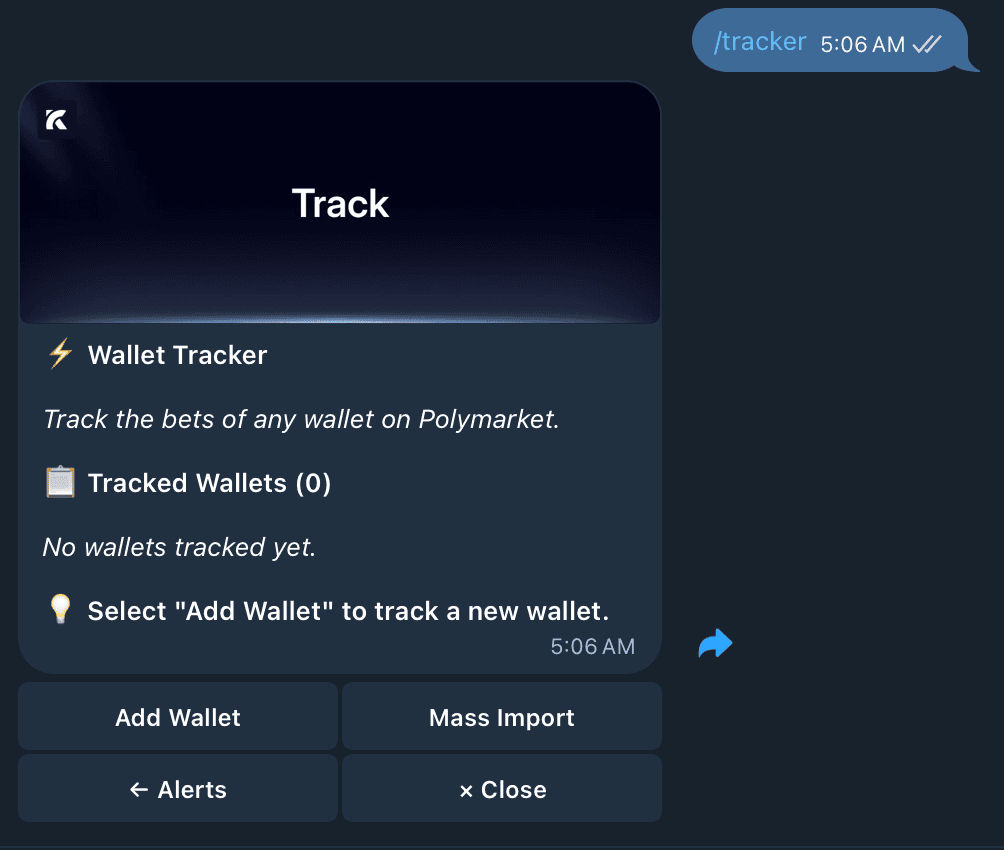
    Send /tracker in Kreo to open the Wallet Tracker.

    Kreo's Wallet Tracker menu showing zero tracked wallets
    Send /tracker to open the Wallet Tracker menu.
  2. 2

    Add a wallet

    Tap Add Wallet. Watching a few candidates? Mass Import adds several at once.
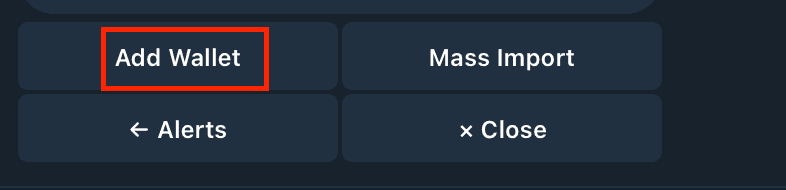
    The Add Wallet button inside Kreo's Wallet Tracker menu
    Tap Add Wallet to track a new wallet.
  3. 3

    Paste the wallet address

    Enter the wallet's address or Polymarket username, then give it a short name once Kreo finds it.
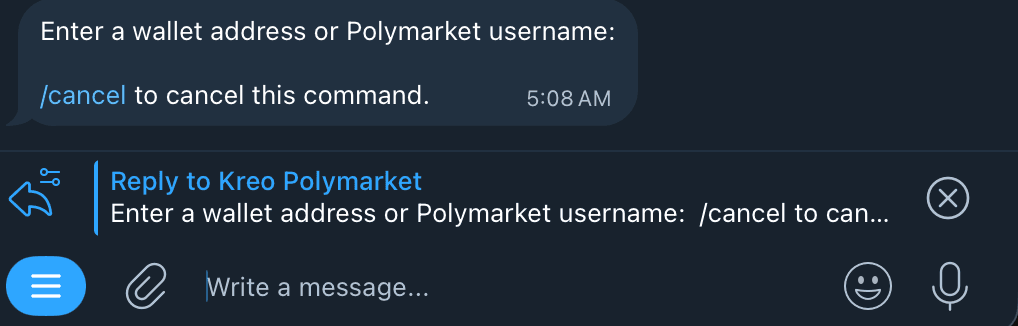
    Kreo prompting for a wallet address or Polymarket username
    Paste the wallet address or Polymarket username you want to track.
  4. 4

    Start tracking and get notified

    Tracking starts immediately — no deposit or trade setup required. You'll get a notification every time the wallet buys or sells, so you can watch how it actually trades before deciding whether it's worth copying.

Risks of copying a wallet

Even after careful research and a week or two of tracking, copy trading still carries real risk. None of the checks in this guide eliminate that risk — they just narrow the odds in your favor. Here's what to understand before you connect real funds:

Execution lag

The price can move before your bot copies the trade, especially in thin markets.

Too many copy traders

A crowded strategy can stop working once enough people are copying it.

Misleading or fake trades

A few traders know they're watched and place trades to throw copiers off.

No trader wins forever

Every profitable strategy eventually goes through losing streaks. Judge traders over hundreds of trades rather than expecting constant wins.

Watch out for fake tools

Only use trading or wallet-tracking tools from official sources. Fake Polymarket products and browser extensions that steal wallet credentials have been reported before. Never paste a private key or seed phrase into a third-party tool!

This is not financial advice

Copy trading a wallet, however well-vetted, still carries real financial risk. Only trade with money you can afford to lose.

Once you're ready to weigh these risks against a live setup, our beginner copy trading guide covers exactly how to manage them when you place your first trade.

Before You Copy Any Wallet

Run through this list one last time. If a wallet checks every box, you're in a strong position to start.

  • 150+ completed trades
  • Consistent history over several months
  • Specialises in a few market categories
  • Builds positions gradually
  • Doesn't rely on automation
  • Tracked for at least one week

Conclusion

The biggest mistake beginners make isn't picking the wrong wallet — it's chasing whichever one posted the biggest headline profit. A single huge win says almost nothing about whether a trader can repeat it.

Consistency beats headlines every time. Sample size, a genuine track record, a focused niche, and how a position gets built all matter more than one standout number.

None of it is worth acting on until you've watched a wallet trade in real time. Track it with Wallet Tracker first, then use our beginner copy trading guide to set up the trade properly once you're ready.

Put this guide into practice

Start tracking a wallet today, then follow our beginner guide when you're ready to set up your first copy trade.

Or compare copy trading bots

Frequently Asked Questions